
Traditional landline systems can be expensive and difficult to scale, especially for growing businesses with remote teams and multiple locations.
IP phone systems offer a more flexible alternative. By routing calls over the internet instead of the traditional Public Switched Telephone Network (PSTN), they can help businesses reduce costs, support remote work, and access advanced calling features like auto attendants, call routing, voicemail, analytics, and app-based calling.
But not every IP phone system works the same way. Some are cloud-based and easy to manage, while others use on-premise or hybrid infrastructure for more control. This guide compares the best IP phone systems for businesses and explains how to choose the right one based on your size, setup, budget, and communication needs.
Best IP Phone Systems at a Glance
Before we dive deeper into each provider, here’s a quick comparison table.
| Provider | Best for | Deployment | Starting price | Key strength | Key drawback |
|---|---|---|---|---|---|
| Nextiva | SMBs and growing teams | Cloud-based | $15/user/mo | Easy all-in-one business communication | May be more platform than very small teams need |
| Avaya | Businesses wanting on-premise or hybrid control | On-premise / private cloud / hybrid | Contact sales | Established IP PBX and UC system | More complex than modern cloud-first tools |
| RingCentral | UCaaS-focused teams | Cloud-based | $20/user/mo | Mature calling, messaging, and meetings | Advanced features can raise costs |
| Ooma Office | Small businesses | Cloud-based | $19.95/user/mo | Simple, affordable setup | Less enterprise depth |
| 3CX | IT-led teams | Cloud-hosted / self-hosted / on-premise | $350/year (annual pricing) | Flexible SIP-based PBX | Requires more technical management |
| Yeastar | SMBs wanting PBX flexibility | Cloud / on-premise | Contact sales | Strong IP PBX options | Less recognizable than larger UCaaS brands |
| Grasshopper | Solopreneurs and small teams | Cloud-based / virtual phone system | $14/mo | Simple business number and call forwarding setup | Too limited for teams that need full UCaaS or IP PBX control |
| Zoom Phone | Existing Zoom users | Cloud-based | $10/user/mo | Easy add-on for Zoom-centric teams | Less traditional PBX depth |
| Vonage | Businesses needing APIs + voice | Cloud-based | $13.99/user/mo | Voice plus communication APIs | Pricing/features may require closer review |
| 8×8 | Global or multi-location teams | Cloud-based | Contact sales | Voice, video, messaging, contact center | May be more than smaller teams need |
What Is an IP Phone System?
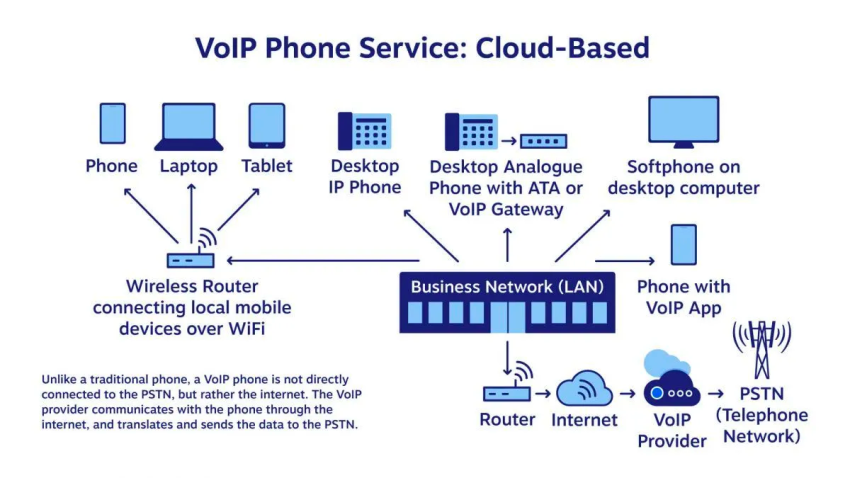
An IP phone system is a business phone system that uses internet protocol technology to make, receive, route, and manage calls instead of relying on traditional copper phone lines.
In plain English, it lets businesses handle phone calls through an internet connection or private IP network rather than the traditional Public Switched Telephone Network (PSTN). Instead of sending voice signals through legacy landlines, an IP phone system converts voice into digital data packets and sends them across a network.
An IP phone system can include:
- IP desk phones that look like traditional office phones but connect through Ethernet or Wi-Fi
- Softphones and mobile apps that let employees make business calls from computers or smartphones
- Call routing, voicemail, caller ID, call forwarding, and extensions
- Auto attendants or IVR menus
- Video calling, SMS, team messaging, analytics, and CRM integrations, depending on the provider
IP phone systems are closely related to VoIP phone systems, and in many business contexts, the terms are used almost interchangeably. The difference, however, is that:
- VoIP refers to the technology that transmits voice over the internet, while an…
- IP phone system is the broader business setup that uses that technology to manage users, devices, phone numbers, routing rules, and calling features.
Benefits of an IP Phone System
Is it worth scrapping your current phone system in favor of an IP phone system that uses the internet to make calls?
Here are six benefits to keep in mind:
- Lower set-up and maintenance costs. You usually need less hardware and less IT support than with traditional phone lines. Because the system runs over the internet, upkeep is simpler and often cheaper.
- More reliable call handling. If one connection fails, calls can often be forwarded to another device or number. That helps reduce downtime from outages, bad wiring, or hardware problems.
- Remote work friendly. IP phone systems make it easy to route business numbers to mobile phones, laptops, or home setups. That makes them a strong fit for distributed teams and virtual contact centers.
- Easy to scale. Adding a new user is usually as simple as updating the account and installing the app or handset. You avoid the delays and installation work that come with a traditional phone line.
- Better customer experience. Features like call queues and call handling help reduce missed calls and long waits. VoIP-to-VoIP calling can also lower costs for customers and staff.
- Smarter call insights. Many modern systems include transcription, summaries, and searchable call records. That makes it easier to review conversations and turn calls into useful business data.
IP Phone System vs. VoIP vs. PBX
IP phone systems, VoIP, and PBX are closely related, but they don’t mean exactly the same thing.
VoIP is the technology, PBX is the call management system, and an IP phone system is the broader business phone setup that uses internet protocol to handle calls.
| Term | What it means | How it’s used |
|---|---|---|
| IP phone system | A business phone system that uses internet protocol technology to make, receive, route, and manage calls | The full system, including users, devices, phone numbers, routing rules, voicemail, and calling features |
| VoIP | Voice over Internet Protocol, the technology that transmits voice calls over the internet or an IP network | The underlying technology that powers many modern business phone systems |
| PBX | Private Branch Exchange, a system that manages internal and external business calls | Can be traditional, IP-based, cloud-hosted, on-premise, or hybrid |
| IP PBX | A PBX that uses IP technology to manage business calls | Often used for on-premise or hybrid business phone systems |
| Cloud PBX | A provider-hosted PBX accessed over the internet | Common in modern cloud-based VoIP phone systems |
How IP phone systems compare to traditional phone systems
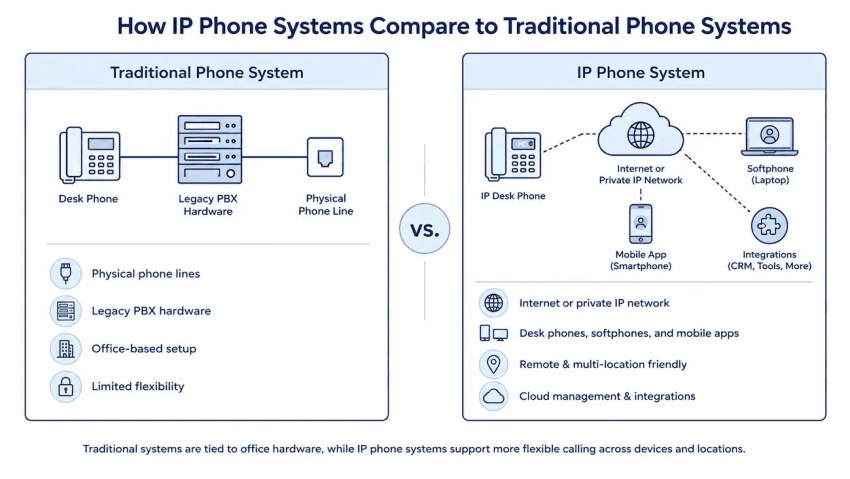
Traditional phone systems rely on physical phone lines, legacy PBX hardware, and location-based infrastructure.
IP phone systems use an internet connection or private IP network, which makes them more flexible for remote teams, multi-location businesses, and companies that need advanced call management features.
The biggest difference is that traditional systems are usually tied to office-based hardware, while IP phone systems can support desk phones, softphones, mobile apps, cloud management, and integrations.
Top 10 IP Phone Systems for Businesses
The best IP phone system for your business depends on whether you need a simple cloud-based phone service, an on-premise IP PBX, or a hybrid setup that supports existing infrastructure.
1. Nextiva
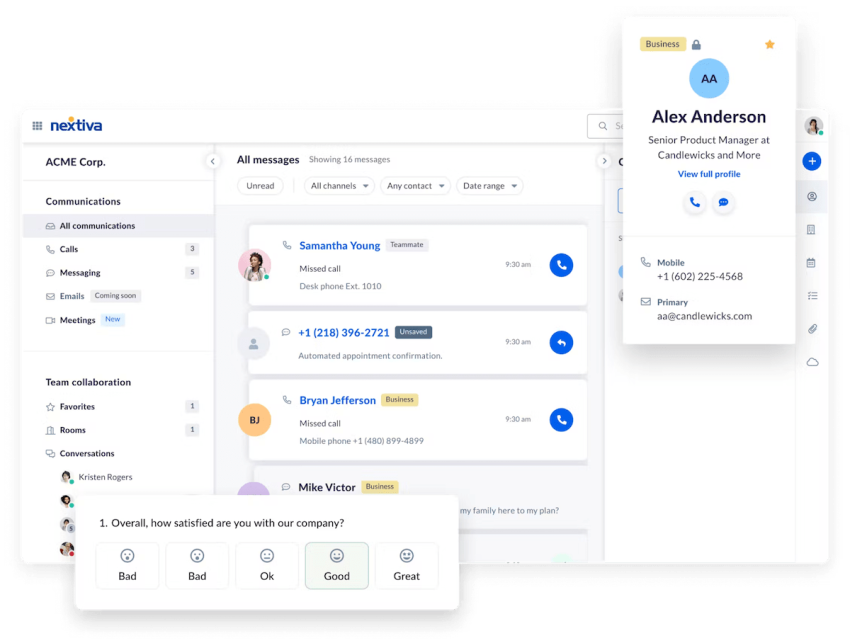
Nextiva is a cloud-based business phone system that combines VoIP calling, messaging, video, analytics, and customer communication tools in one platform. It also offers AI-powered add-ons, including XBert AI Receptionist, which can help answer calls, route customers, and reduce manual call handling.
Best for: Small and midsize businesses that want cloud calling, collaboration, and customer communication tools in one platform
Deployment: Cloud-based
Key features: VoIP calling, auto attendant, voicemail transcription, call routing, call queues, analytics, SMS, video meetings, mobile/desktop apps, CRM integrations
Pros:
- Easy cloud-based setup with mobile, desktop, and browser access
- Includes core business calling features like routing, voicemail, SMS, video, and team chat
- Can scale beyond phone service with analytics, customer experience tools, and AI add-ons like XBert AI Receptionist
Cons:
- May be more platform than very small teams need
- Advanced analytics and AI features can increase costs
- Not a fit for businesses that want to manage their own on-premise IP PBX
Pricing: Starts at $15/user/month (Core, annual billing); Engage at $25/user/month; Power Suite CX at $75/user/month. AI add-ons start at $99/month.
⭐ Read Nextiva reviews on G2 (4.5 stars)
2. Avaya
Avaya IP Office is a flexible business communication platform with on-premise, hybrid, private-cloud, and cloud deployment options, while Avaya Cloud Office is the cloud-hosted product for calling, messaging, meetings, and collaboration.
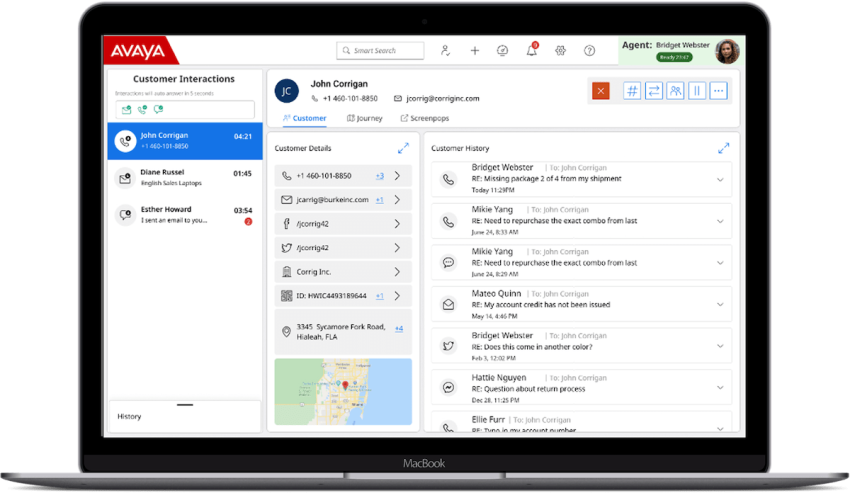
Best for: Businesses that want an established IP phone system with flexible deployment options
Deployment: On-premise / hybrid / cloud-hosted
Key features: IP telephony, unified communication, desk phone support, collaboration tools, call management
Pros:
- Supports on-premise, hybrid, private-cloud, and cloud deployment options
- Strong fit for businesses with existing Avaya hardware or infrastructure
- Offers more deployment flexibility than cloud-only phone providers
Cons:
- More complex to compare and configure than simpler cloud-first VoIP systems
- On-premise and hybrid setups may require partner support or internal IT resources
- Pricing can be less transparent than providers with standard self-service plans
Pricing: Avaya IP Office is typically quote-based. Avaya Cloud Office starts at $20/user/month (Core, annual) or $25/user/month (monthly), up to $35–$40/user/month for higher tiers.
⭐ Read Avaya reviews on G2 (4.5 stars)
3. RingCentral
RingCentral RingEX is a cloud-based business phone system combining calling, messaging, video, SMS, and AI-powered communication tools in one app.
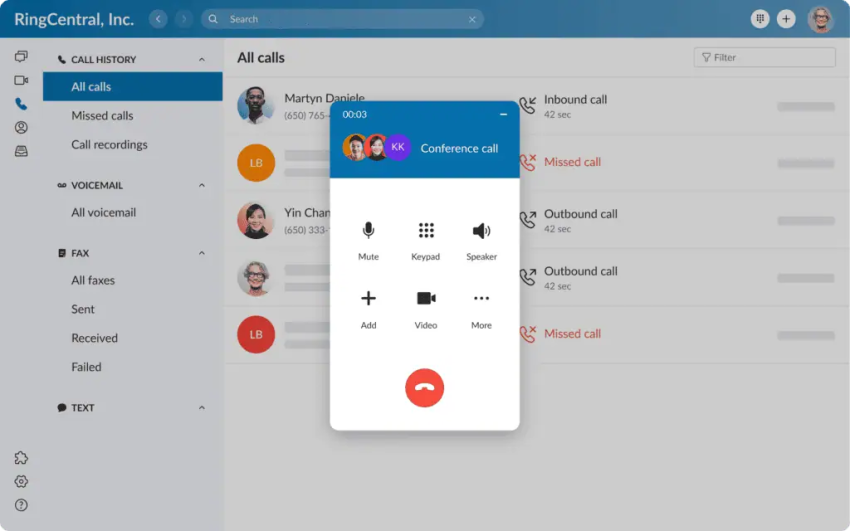
Best for: Businesses that want a mature cloud phone system with calling, messaging, video, and AI collaboration tools
Deployment: Cloud-based
Key features: VoIP calling, auto attendant, IVR, call routing, voicemail, SMS, team messaging, video meetings, analytics, integrations, AI transcription
Pros:
- Combines phone, messaging, video, SMS, and AI features in one platform
- Strong call management features, including auto attendant, IVR, call queues, and routing
- Broad integrations with business tools like Microsoft, Google, Salesforce, HubSpot, and Zendesk
Cons:
- May be more expensive than simpler small-business phone systems
- Some advanced features, integrations, and higher limits require upper-tier plans
- Less suited for businesses that want on-premise or hybrid IP PBX control
Pricing: Starts at $20/user/month (Core, annual); Advanced at $25/user/month; Ultra at $35/user/month.
⭐ Read RingCentral reviews on G2 (4.2 stars)
4. Ooma Office
Ooma Office is a cloud-based business phone system built for small businesses, with VoIP calling, a virtual receptionist, extension dialing, call forwarding, voicemail, and mobile access.
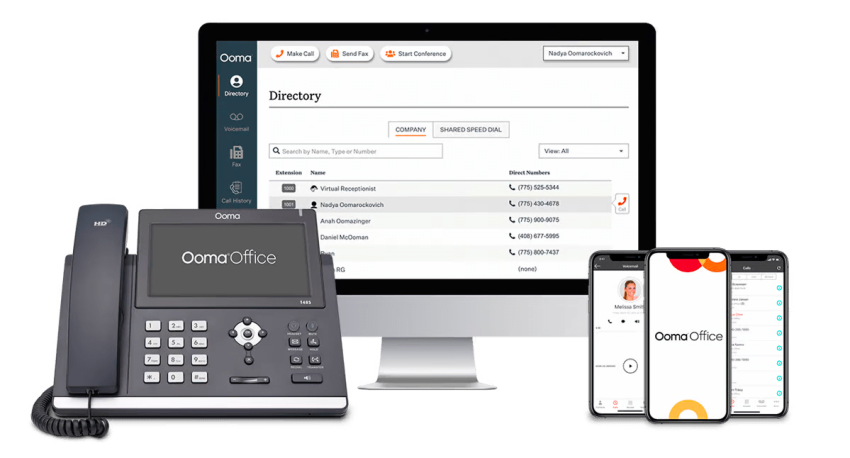
Best for: Simple small-business VoIP
Deployment: Cloud-based
Key features: VoIP calling, virtual receptionist, call forwarding, voicemail, mobile app, desktop app (Pro+), SMS, video meetings (Pro+), call recording, call queues
Pros:
- Simple setup and easy day-to-day administration
- Affordable monthly pricing with no long-term contract required
- Good fit for small offices, local businesses, and teams replacing basic landlines
Cons:
- Less advanced than enterprise UCaaS or contact center platforms
- Some useful features, like desktop app, call recording, and video meetings, require higher-tier plans
- Not ideal for businesses that need deep customization or on-premise IP PBX control
Pricing: $19.95/user/month (Essentials), $24.95 (Pro), $29.95 (Pro Plus). No contract required.
⭐ Read Ooma Office reviews on G2 (4.6 stars)
5. 3CX
3CX is a software-based business phone system that can be hosted by 3CX, self-hosted, or deployed on-premise, with annual license pricing based on simultaneous calls rather than per-user monthly fees.
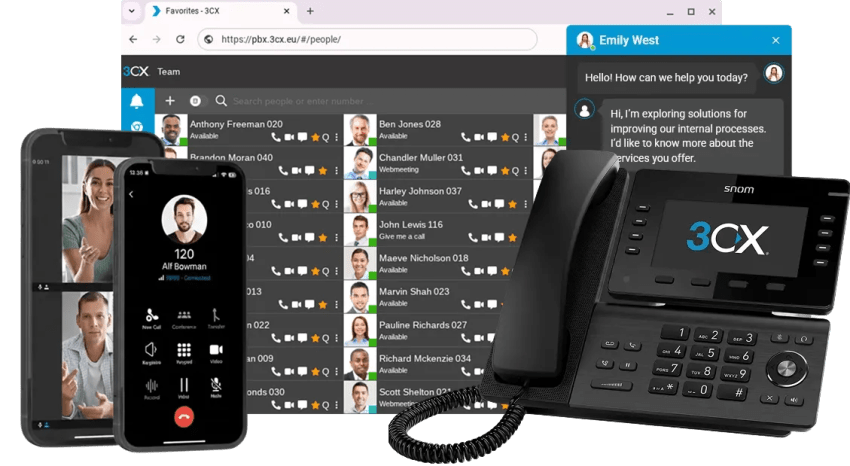
Best for: IT-led businesses that want flexible PBX control without per-user pricing
Deployment: Cloud-hosted / self-hosted / on-premise
Key features: VoIP calling, SIP trunking, call routing, IVR, call queues, video conferencing, live chat, WhatsApp, SMS, mobile apps, web client, call recording
Pros:
- Flexible deployment options, including hosted, self-hosted, and on-premise
- Annual pricing model based on simultaneous calls instead of per-user billing
- Strong feature set for calling, chat, video, live chat, queues, and remote work
Cons:
- Can require more technical setup and management than simpler cloud phone systems
- Businesses may need to manage SIP trunks, hosting, phones, or partner support separately
- Pricing and plan selection can be harder to compare than standard per-user VoIP plans
Pricing: Annual licensing starts at $305/year (PRO, 4 SC) or $380/year (ENT, 4 SC), based on simultaneous calls, not per-user fees. Hosting adds $250–$850/year. Free SMB tier supports up to 10 users.
⭐ Read 3CX reviews on G2 (4.4 stars)
6. Yeastar
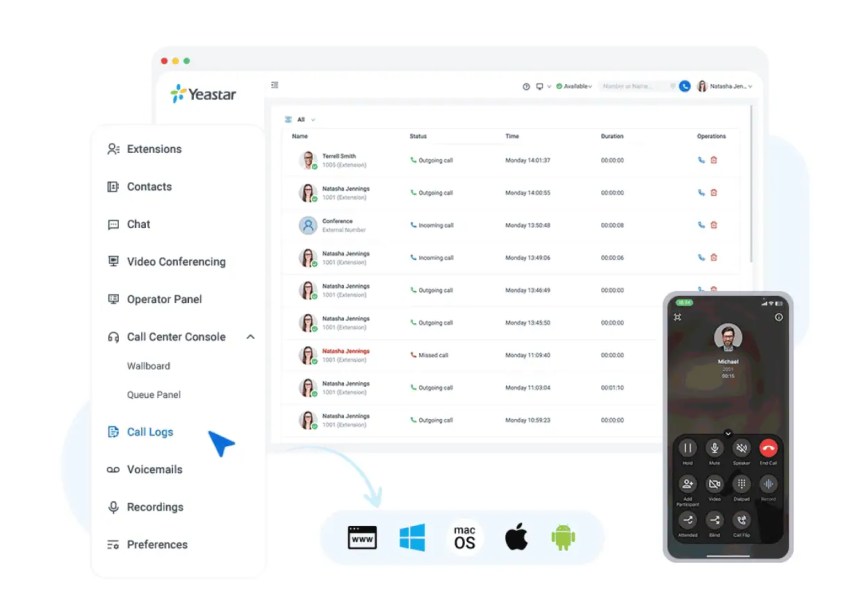
Yeastar’s P-Series PBX lineup offers cloud, software, and appliance-based editions for small and midsize businesses needing IP telephony, call management, and unified communications.
Best for: SMBs that want flexible PBX deployment options
Deployment: Cloud-based / self-hosted / on-premise appliance
Key features: VoIP calling, SIP trunking, auto attendant, IVR, call routing, call queues, voicemail, call recording, video conferencing, web/mobile/desktop clients, CRM integrations
Pros:
- Flexible deployment options, including cloud, self-hosted software, and on-premise appliances
- Strong PBX feature set for SMBs, including IVR, queues, call recording, and unified communications tools
- Supports bring-your-own SIP trunks and compatible IP phones
Cons:
- Can require more technical setup than simpler cloud-only business phone systems
- Pricing may vary by edition, deployment, subscription plan, partner, and hardware needs
- Less mainstream brand recognition than larger UCaaS providers like RingCentral or Nextiva
Pricing: Pricing varies by edition and deployment; contact Yeastar or a reseller for a quote. P-Series Appliance hardware starts around $999 for the P550.
⭐ Read Yeastar reviews on G2 (4.8 stars)
7. Grasshopper
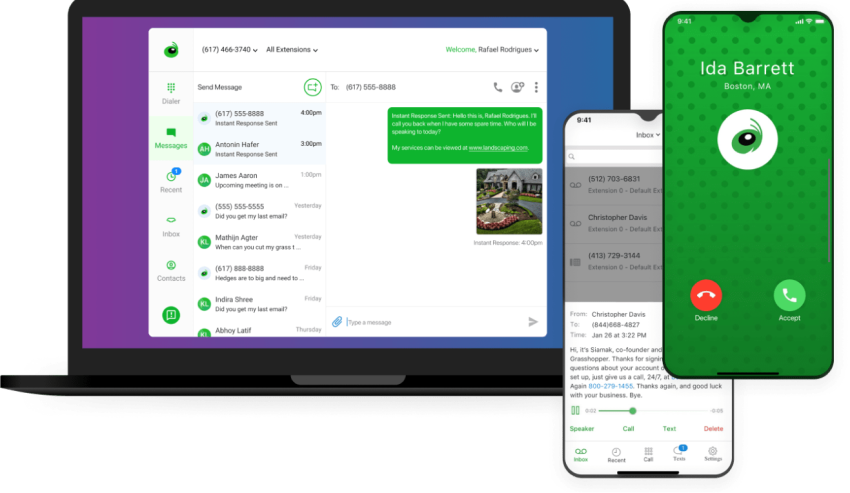
Grasshopper is a virtual phone system for entrepreneurs and small businesses that want a separate business number with simple call management, texting, voicemail, and extensions, without replacing existing phones.
Best for: Solopreneurs and small teams
Deployment: Cloud-based / virtual phone system
Key features: Business phone numbers, unlimited calling (US/Canada), business texting, call forwarding, custom greetings, voicemail transcription, extensions, mobile/desktop apps, virtual fax, 24/7 support
Pros:
- Simple setup with no desk phone hardware required
- Affordable entry point for solo users and very small businesses
- Flat-rate plans can be cost-effective for teams that need multiple users or extensions
Cons:
- Less robust than full business phone systems like RingCentral, Nextiva, or 8×8
- Limited fit for businesses that need advanced call routing, analytics, integrations, or contact center tools
- Not designed for on-premise, hybrid, or hardware-based IP PBX environments
Pricing: Starts at $14/month (True Solo, annual); Solo Plus at $25/month; Small Business at $80/month. Flat-rate plans, not per-user.
⭐ Read Grasshopper reviews on G2 (3.9 stars)
8. Zoom Phone
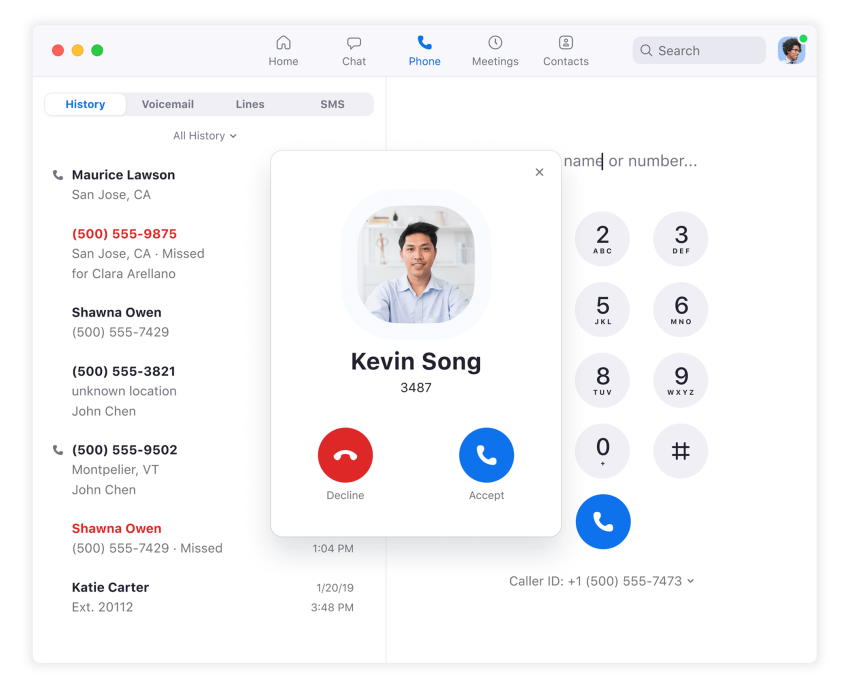
Zoom Phone is a cloud-based VoIP system built into Zoom Workplace, combining calling, SMS, voicemail, and routing alongside Zoom’s video, chat, and collaboration tools.
Best for: Teams already standardized on Zoom
Deployment: Cloud-based (Native + BYOC options)
Key features: VoIP calling, SMS, voicemail transcription, call recording, call routing, auto attendants, call queues, desk phone support, mobile/desktop apps, Zoom Meetings integration
Pros:
- Strong fit for businesses already using Zoom Meetings or Zoom Workplace
- Combines phone, video, chat, SMS, and collaboration tools in one app
- Supports compatible desk phones from brands like Yealink, Poly, and Mitel
Cons:
- Best value usually comes when paired with the broader Zoom ecosystem
- Advanced needs may require add-ons, higher-tier plans, or careful plan comparison
- Less suited for businesses that want full on-premise or hybrid IP PBX infrastructure
Pricing: $10/user/month (US/Canada Metered), $15/user/month (US/Canada Unlimited, annual), $20/user/month (Global Select).
⭐ Read Zoom Phone reviews on G2 (4.6 stars)
9. Vonage
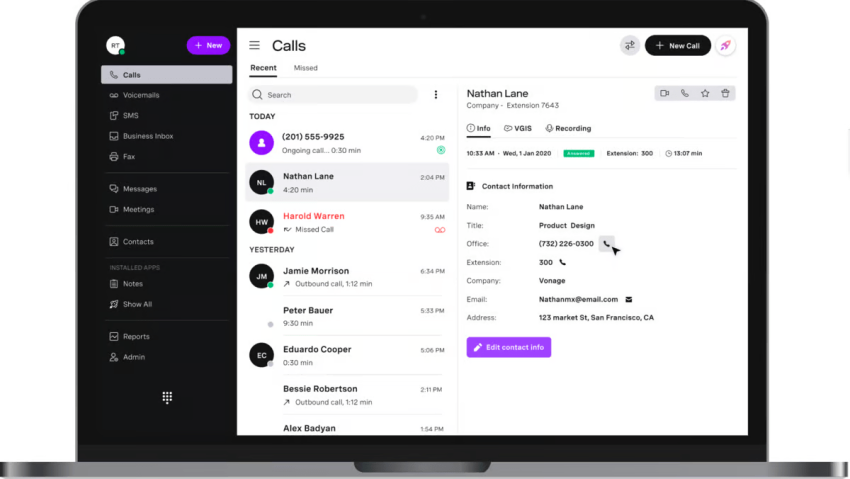
Vonage Business Communications is a cloud-based platform for calling, messaging, video, and collaboration, with additional contact center tools and communications APIs for programmable or customer engagement workflows.
Best for: Businesses wanting cloud calling and programmable communications APIs
Deployment: Cloud-based
Key features: VoIP calling, SMS, team messaging, video meetings, mobile/desktop apps, voicemail, call routing, admin portal, CRM integrations, contact center options, communications APIs
Pros:
- Combines business phone, messaging, video, and collaboration tools
- Stronger API and contact center ecosystem than many basic VoIP providers
- Offers integrations with tools like Salesforce, Microsoft Teams, Microsoft Dynamics, and ServiceNow
Cons:
- Add-ons can increase the total monthly cost
- Plan and feature comparisons can be less straightforward than simpler VoIP providers
- Less relevant for businesses that want on-premise or hybrid IP PBX infrastructure
Pricing: $13.99/line/month (Mobile, annual), $20.99 (Premium), $27.99 (Advanced). Standard monthly rates are higher.
⭐ Read Vonage reviews on G2 (4.3 stars)
10. 8×8
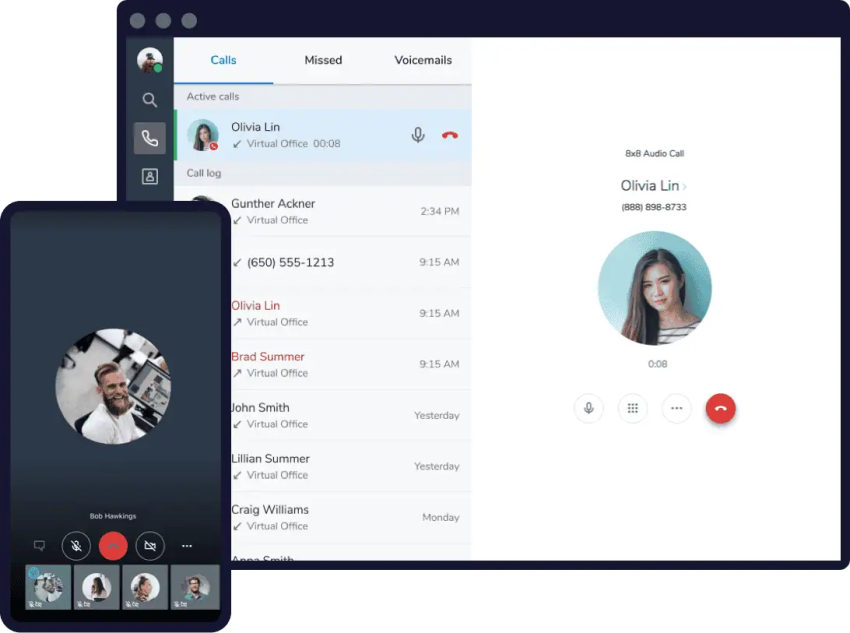
8×8 is a cloud communications platform combining unified communications, contact center, global telephony, video, messaging, and APIs in one AI-powered system.
Best for: Global teams needing UCaaS and contact-center capabilities
Deployment: Cloud-based
Key features: VoIP calling, team messaging, video meetings, SMS/MMS, call routing, auto attendant, analytics, contact center, workforce engagement, integrations, communications APIs
Pros:
- Combines business phone, messaging, video, contact center, and APIs in one platform
- Strong fit for multi-location or global businesses with broader communication needs
- Offers advanced capabilities across AI, analytics, workforce engagement, integrations, and security
Cons:
- May be more complex than small teams need for basic phone service
- Public pricing is not transparent; 8×8’s current pricing page emphasizes custom packages and quote-based plans
- Advanced contact center, AI, workforce engagement, and global calling needs can increase total cost
Pricing: 8×8’s current pricing page does not publish standard plan prices and instead directs buyers to build a custom plan or request a quote.
⭐ Read 8×8 reviews on G2 (4.1 stars)
How to Choose the Best IP Phone System
The best IP phone system depends on how your team works, what infrastructure you already have, and which features matter most. Start by narrowing down your deployment model, devices, call management needs, integrations, and security requirements.
1. Choose a deployment model
IP phone systems come in cloud-based, on-premise, and hybrid forms. Cloud systems are easiest to deploy and maintain, on-premise systems give you more control, and hybrid systems combine both approaches.
| Type | How it works | Pros | Cons |
|---|---|---|---|
| Cloud-based | Hosted and managed by a provider | Fast setup, lower upfront cost, remote-friendly, easy to scale | Depends on internet quality, less infrastructure control |
| On-premise | Installed and managed in your office | More control over hardware, configuration, and security | Higher upfront cost, more IT support needed |
| Hybrid | Mixes cloud and on-premise components | Good for legacy systems and phased migration | More complex to set up and manage |
2. Decide on devices
Next, decide how employees will make and receive calls. IP desk phones suit offices and shared spaces, while softphones and mobile apps work well for remote and hybrid teams. Many businesses use both.
3. Compare call features
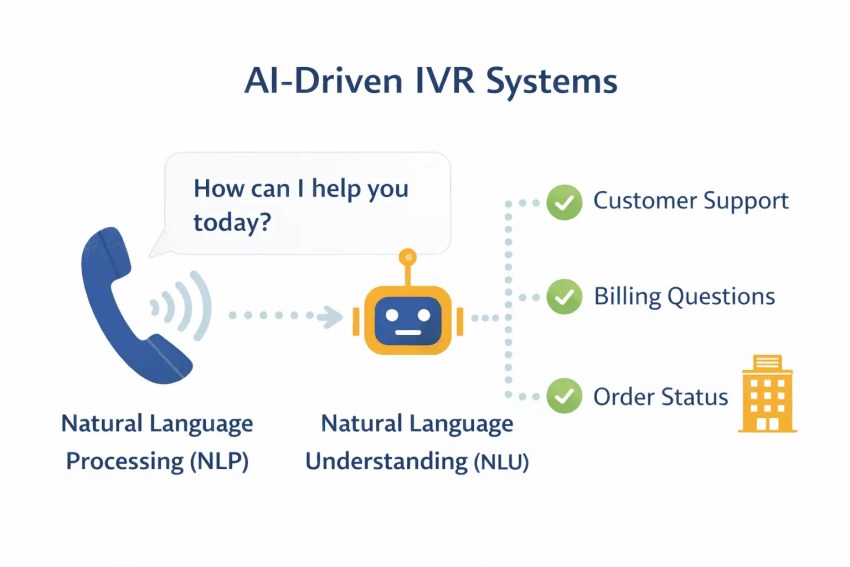
Focus on features that improve call handling and customer experience, such as voicemail, call forwarding, auto attendants, IVR, call routing, queues, caller ID, recording, and analytics. High-volume teams usually need queues, routing, and analytics most, while smaller businesses often prioritize voicemail, forwarding, and an auto attendant.
4. Check integrations
The system should fit into your existing workflow. CRM, help desk, video, SMS, team chat, and contact center integrations can reduce manual work and improve context for sales and support teams.
5. Review security and support
Security and reliability matter, especially if you handle sensitive data. Look for encryption, secure voice protocols, regular updates, redundancy, disaster recovery, admin controls, compliance support, and responsive customer service.
Which IP phone system is best for your business?
Use this quick guide to narrow your options:
| Business need | Best-fit IP phone system |
|---|---|
| You want the easiest setup | Cloud-based IP phone system |
| You have a small team or limited IT support | Simple cloud VoIP provider |
| You already use desk phones or PBX hardware | On-premise or hybrid IP PBX |
| You want to support remote or hybrid employees | Cloud-based system with mobile and desktop apps |
| You need more control over infrastructure and security | On-premise or private-cloud IP phone system |
| You want to keep some legacy phone infrastructure | Hybrid IP phone system |
| You handle high call volume | Cloud phone system with call queues, analytics, routing, and contact center features |
| You need advanced customer experience tools | UCaaS or CCaaS-ready platform |
| You want flexible SIP trunking and PBX control | Software-based or appliance-based IP PBX |
| You mainly need a business number and call forwarding | Virtual phone system |
How Much Do IP Phone Systems Cost?
IP phone system costs depend on the deployment model, number of users, hardware needs, and feature set. Cloud systems usually charge per user, per month, while on-premise systems require more upfront spending on hardware, licensing, installation, and support.
Cloud IP phone system pricing
Cloud VoIP plans are typically sold as monthly or annual subscriptions. Basic plans often start around $15–$30 per user per month, while more advanced plans with call recording, analytics, CRM integrations, or contact center features can cost more.
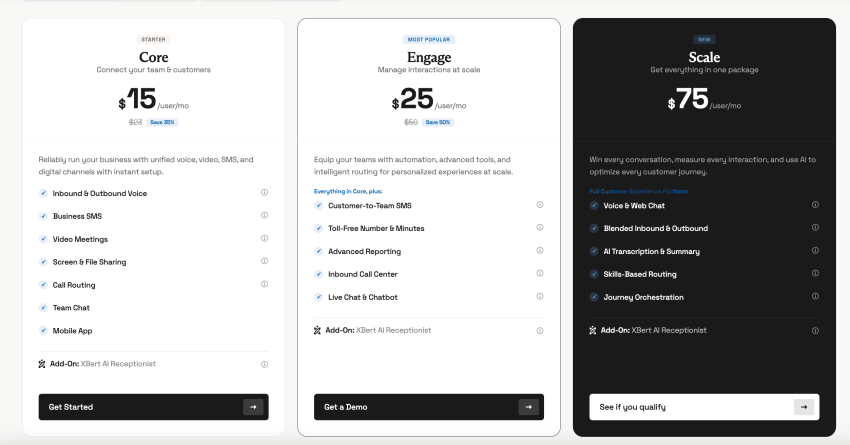
Cloud pricing is usually best for businesses that want lower upfront costs, provider-managed maintenance, easy scaling, remote access, and predictable monthly billing.
On-premise IP PBX pricing
An on-premise IP PBX system usually costs more upfront because your business owns or manages more of the infrastructure. Typical costs may include:
| Cost category | Typical cost range | What it covers |
|---|---|---|
| IP PBX appliance or server | $500–$5,000+ | Core call management, extensions, routing, voicemail |
| Software licensing | $100–$300+ per user or extension | User seats and advanced features |
| Installation and configuration | $1,000–$10,000+ | Setup, call flows, routing, testing |
| SIP trunking | $15–$50+ per trunk/month | Internet-based phone lines |
| Maintenance and support | 10%–20% of system cost annually | Updates, troubleshooting, repairs |
| Internal or outsourced IT support | Varies widely | Ongoing administration and security |
A small office may spend a few thousand dollars upfront, while a larger business with multiple locations and more complex routing can spend significantly more.
IP phone hardware costs
Many systems can run on softphones and mobile apps, but physical hardware often adds to the budget. Common costs include:
| Hardware | Typical cost range | Why you might need it |
|---|---|---|
| IP desk phones | $75–$300+ each | Receptionists, executives, shared desks |
| IP conference phones | $300–$1,500+ each | Meeting rooms |
| Headsets | $30–$250+ each | Sales and support teams |
| Routers and firewalls | $100–$500+ | Secure, reliable voice traffic |
| PoE switches | $75–$500+ | Power phones over Ethernet |
| Analog telephone adapters | $25–$100+ each | Connect fax machines or legacy devices |
| Backup internet or power supplies | $100–$1,000+ | Reduce downtime |
Hidden costs to consider
Remember that the lowest sticker price is not always the lowest total cost. Be mindful of these potential hidden costs:
- Set-up or implementation fees
- Number porting fees
- International calling rates
- Toll-free numbers and minutes
- Advanced analytics or reporting
- Call recording storage
- Contact center add-ons
- AI features or automation tools
- CRM or help desk integrations
- Admin or IT support
- Hardware replacement
- Training and onboarding
- Early termination fees or long-term contract requirements
Time for an Upgrade? Choose Nextiva
Choosing the right IP phone system starts with understanding how your team communicates today and where your business needs to go next.
For some businesses, that means replacing legacy landlines with a simple cloud-based phone system. For others, it means finding a flexible hybrid or on-premise IP PBX that works with existing infrastructure. The best choice depends on your users, devices, call volume, IT resources, budget, and customer communication needs.
With Nextiva, you can move to a cloud-based business phone system that supports calling, video, messaging, mobile access, analytics, and customer engagement tools in one platform. Plans start at $15 per user per month, making it easy to modernize your phone system without the complexity of traditional telecom infrastructure.
Switch to the #1 Rated Cloud Phone System to Run Your Business
Move on from your old PBX and upgrade to the industry’s highest rated hosted VoIP system. Get flexible, reliable cloud communications anywhere your team works.
IP Phone System FAQs
An IP phone system routes voice calls over the internet (or a private IP network) instead of traditional copper phone lines. It converts audio into digital data packets, transmits them over the network, and reassembles them at the other end, the same way email or web traffic works.
Primarily cost and flexibility. VoIP phone calls are significantly cheaper than a traditional phone system, especially for long-distance and international calls. It also lets you make and receive calls from anywhere with an internet connection, and easily scales up or down without new hardware.
Yes, for most people and businesses VoIP phone service is a full landline replacement. You keep your existing phone number, make 911 calls, and use standard handsets (with an adapter) or a dedicated IP phone. The main caveat: VoIP service depends on your internet connection and won’t work during a power or internet outage unless you have a backup.
Yes. You pay a monthly subscription to a VoIP provider rather than a traditional phone company. Plans typically range from around $10–$30/month for personal use and $20–$50/user/month for business plans, though pricing varies widely by provider and features included.
“IP VoIP” is just VoIP, so the phrase is redundant. VoIP already means Voice over Internet Protocol, so the IP is built into the term.
